There are two kinds of 911 dispatcher game. One is a management sim: incidents pop up on a map and you drag teams onto them. The other puts you on the phone with the caller and asks what you'd say next. Both can be fun, but they test very different things, and it helps to know which one you're after before you download anything.
What to look for
- Decisions that change the outcome. If every call ends the same way no matter what you pick, it's a story with buttons, not a game. A good one lets you get it wrong, and shows you the consequence.
- The address problem. Finding the caller is the hardest part of real call-taking. Callers panic, mumble and misspeak. A game that hands you the location for free skips the most interesting skill.
- Limited resources. Sending every unit to every call is easy. Deciding who you can spare when the next line is already ringing is the actual job.
- Feedback you can learn from. A grade on its own tells you nothing. A breakdown of each decision, and why it was right or wrong, is what makes you better next time.
- Fair monetization. Energy timers and ads in the middle of a cardiac arrest call ruin the tension. Look for games that keep ads away from the action.
- Works offline. Phone games get played on trains and in waiting rooms. Story content that's bundled with the app doesn't need a signal.
Phone-first or map-first?
Map-first dispatcher games tend to be on PC and are great if you enjoy juggling dozens of incidents at once. Phone-first games are smaller in scale but closer to what a call-taker hears: one frightened person, a few seconds to decide, and no way to see what's happening. If you want the pressure of the conversation itself, go phone-first. Our comparison with the best-known map game is in games like 911 Operator.
Our pick for Android: 911 Dispatch
We make 911 Dispatch, so take this with that in mind. It's built around everything on the list above:
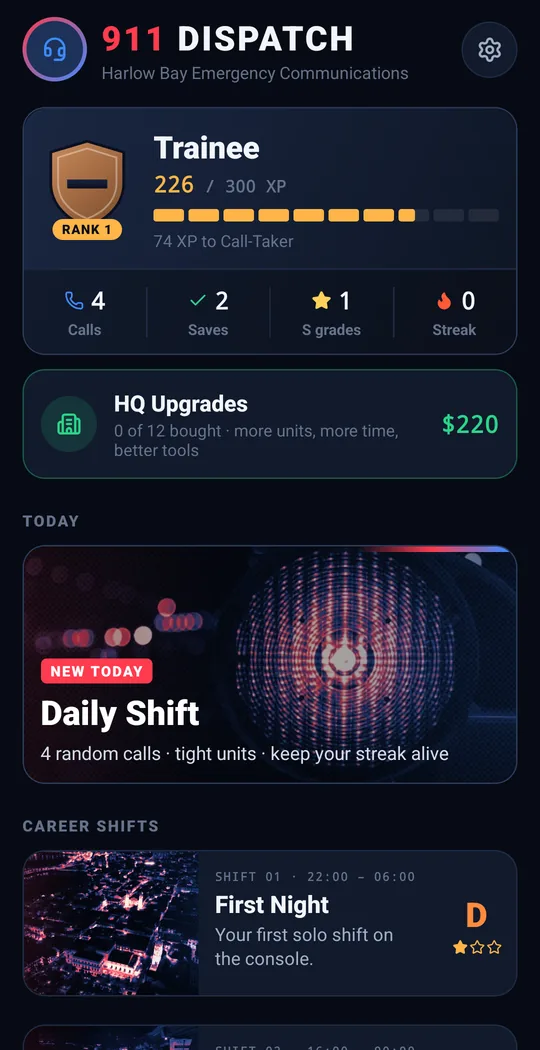
- 40 hand-written calls over 10 career shifts, from kitchen fires and cardiac arrests to break-ins, hostage claims and a baby arriving in the back of a car. Some calls that sound like pranks aren't.
- Three sound-alike addresses on every call. Pick the wrong one and the ambulance goes to the wrong street.
- A limited unit pool per shift. Units you send stay busy for the next call.
- A live CAD-style map with your units driving to the scene.
- A debrief after every call that grades Response, Dispatch, Address and Handling, then explains each decision.
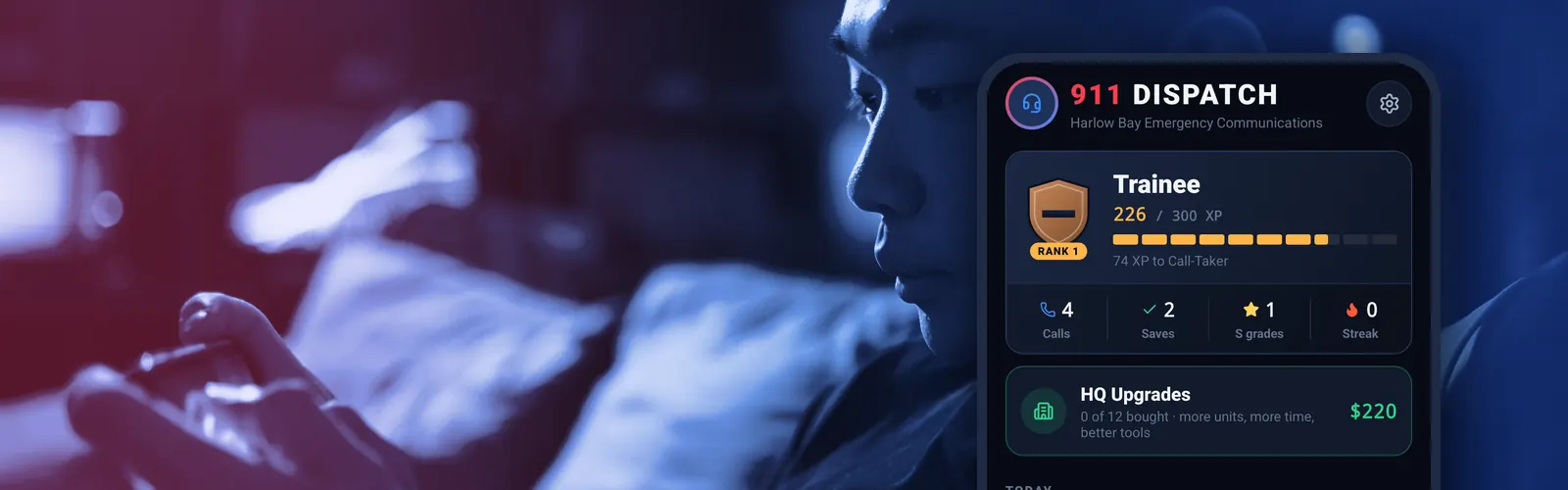
- A Daily Shift of four random calls with tighter units, and a streak to keep.
- No ads when you open the app, none mid-call, and no energy timers. It plays offline.
What it doesn't do
911 Dispatch isn't a city-builder, and you won't manage a hundred incidents at once. Each shift is four calls, so a shift fits into a coffee break. If you want sprawling management, a PC sim will suit you better. If you want the voice on the line and the clock running, that's what we built.
911 Dispatch is a game. Its calls are fiction, simplified so they can be played, and nothing in it is training for real emergencies. If you need help, call 911 or your local emergency number.