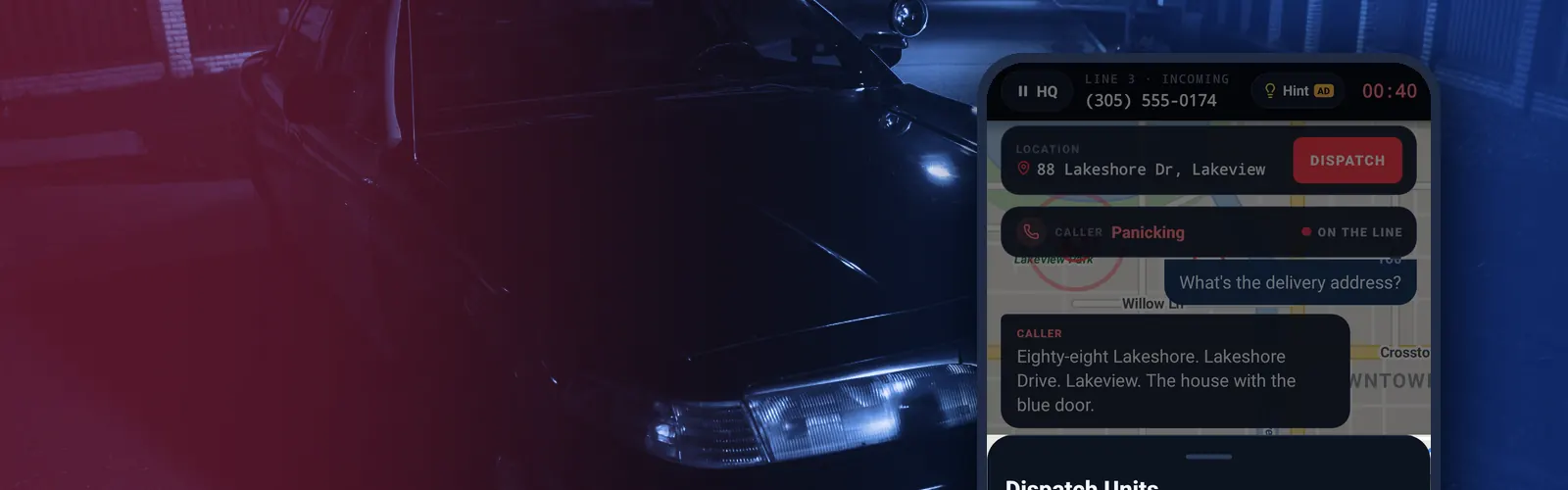
Police calls are some of the tensest in any police dispatcher game, because the danger is often still in the room. The caller may be whispering from a closet, or unable to speak at all. In 911 Dispatch, police calls test two things at once: getting officers to the right door, and keeping the caller alive until they arrive.
The police calls you'll take
Across the 10 career shifts in Harlow Bay you'll handle, among others:
- Someone's Downstairs: a homeowner hears an intruder and has to stay hidden and quiet.
- Pizza Order: a caller who can't say what's wrong. Read the story behind the 911 pizza call.
- Silent Alarm and Shots Fired on the Full Moon shift.
- Being Followed: a caller on foot, being tailed through the city at night.
- Barricaded, Hostage Claim and Bank Robbery, where SWAT may be the right call, and may not.
- Baby in the Car, Lost at the Mall and, in the earthquake incident, Missing Boy.
What police calls ask of you
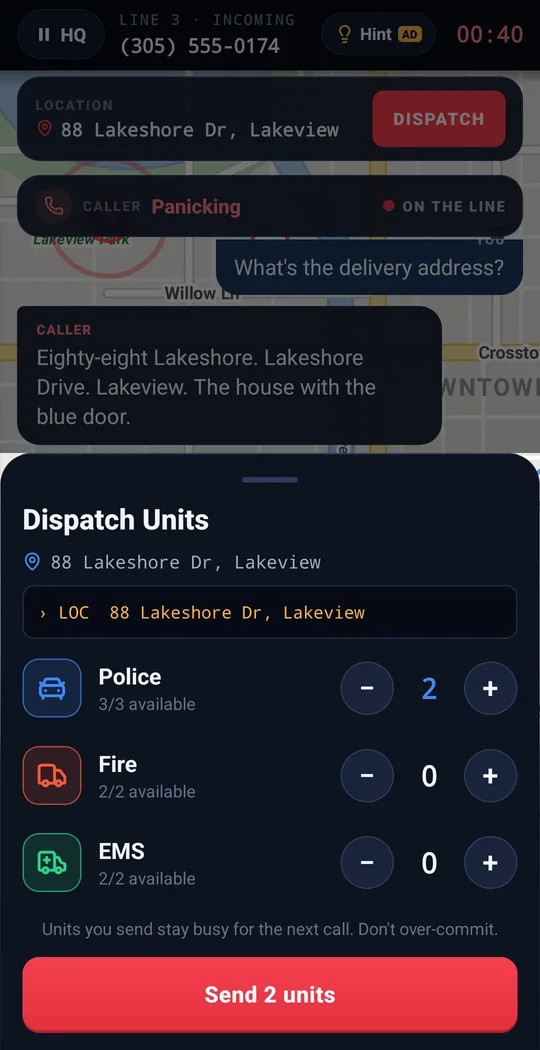
Location first. Officers can't help anyone at the wrong house. Every call gives you three sound-alike addresses, and on police calls the caller may only be able to whisper it.
Ask about weapons. Whether a suspect is armed changes how officers approach. Sometimes the caller can only answer yes or no, so you have to ask the right yes-or-no questions.
Keep the caller safe. Hide, stay quiet, lock the door, don't confront anyone, leave the line open. The wrong instruction can get the caller hurt.
Send the right amount. Two patrol cars may be exactly right. SWAT on a call that didn't need it leaves you short for the next one, and it's scored as waste.
How real police dispatch differs
Real dispatch centers run on computer-aided dispatch (CAD) systems, radio protocols and local policies that vary from one agency to the next. Many agencies have moved from numeric radio codes toward plain language, which US national incident guidance encourages so that different agencies understand each other. 911 Dispatch keeps the radio traffic short and readable for the same reason, and it simplifies a lot. It's a game about the decisions, not a procedure manual.
911 Dispatch is a game. Its calls are fiction, simplified so they can be played, and nothing in it is training for real emergencies. If you need help, call 911 or your local emergency number.